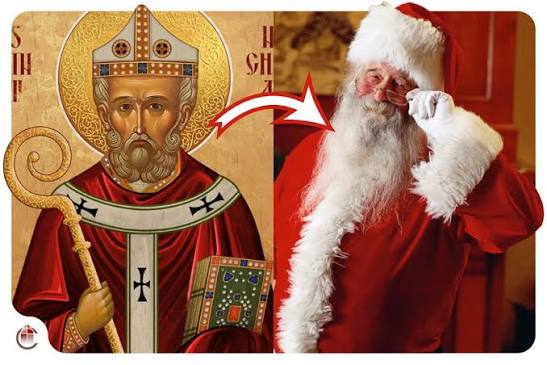
Saint Nicholas Santa Claus
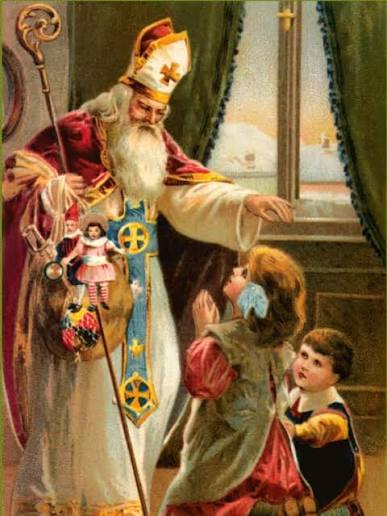
The early life of Saint Nicholas
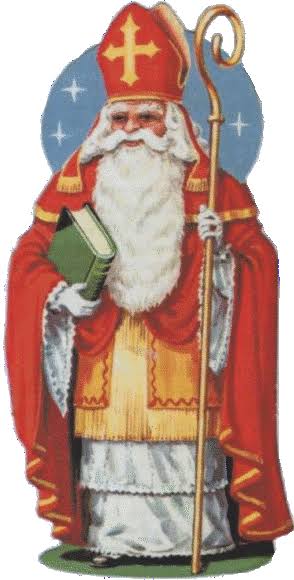
What do you say when someone asks you who is Santa Claus?
You say a jolly old man dressed in red flying in a sleigh with reindeer's pulling it who loves cookies and milk.
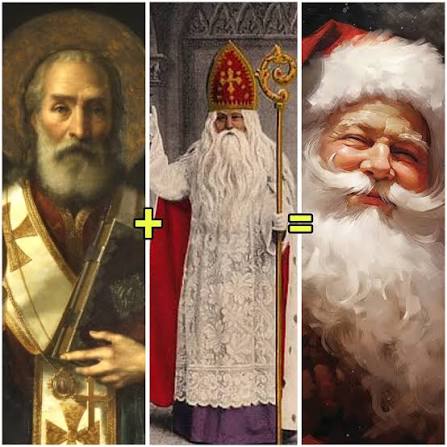
The true man behind this image is the widely known Saint Nicholas.
There is not a lot about the history of Saint Nicholas and there is no denial of his popularity.
He was in both Eastern and Western Churches, he is the Saint most pictured by Christian artists, second only to the Blessed Virgin.
He was born March 15, 270 in Lycia (Asia Minor). He was born into a wealthy family.
They brought him up very well while encouraging his need for true religion. At a young age he had a strong devotion to Christ.
He also lost his parents at a young age and used his inheritance to help the sick, needy, and poor. As he got older he continued to help
and serve others.
Nicholas as Bishop of Myra
His uncle, the Archbishop of Myra in Lycia at the time, ordained Saint Nicholas as a priest and appointed him abbot of a monastery.
After the death of his uncle, the Archbishop,
Saint Nicholas was appointed the Bishop of Myra.
In Lycia and served on the first council of Nicaea in 325, but his entire life he kept the same spirit of generosity and earning the
description, " the special protector of the innocent and wronged."
The Legends of the Dowries
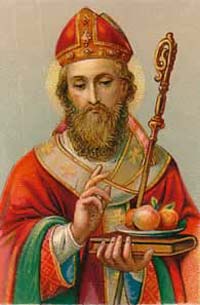
Saint Nicholas died in 350. His Legacy is most well known for the protector of well behaved children.
This is thought to inspire the " naughty and Nice List."
He got this reputation from bringing back to life of two well-behaved schoolboys after they had a rather sad death.
If you are French or not and have heard the French song Le Legende de Saint Nicolas, you might be familiar with that story.
Another event that furthered his reputation was helping a father that was to sell his three daughters into prostitution
because he couldn't pay their dowries.
Saint Nicholas refused to let that happen and wanted to protect the girls.
So for Three night Saint Nicholas snuck to the fathers home and left a bag of gold in his bedroom window, so the father could
pay his daughters dowries.
The Father caught Saint Nicholas on the third night in the act and thanked him for being his helper and for delivering his soul and his daughters souls from hell.
Some legends even say that the coins he tossed to the fathers window sill fell into the daughters stockings which they had hanging.
Sounds familiar? Doesn't it?
It is said that this legend led to the custom of gift giving to celebrate the saints feast.
The Protector
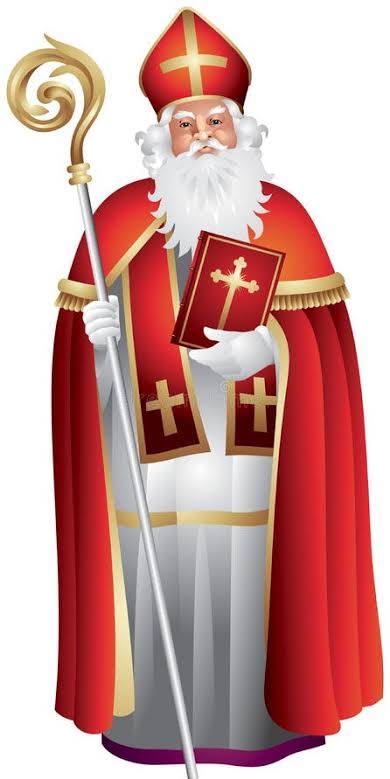
He is also known for the Protector of Sailors.
This reputation came from coming to the aid of sailors who were stuck in storms at sea near Lycia.
Saint Nicholas would just appear, manning the ropes and sails and bringing the ship to port.
Another well known tale describes a ship that ran aground in a storm, The sailors prayed for Saint Nicholas to help them.
He then appeared on the ship, helping them free it with ropes and poles and the vanish.
The sailors were very happy to be alive so after reaching a safe harbor,
the grateful sailors went to the cathedral in the nearby city of Myra to Thank God. To their surprise, they found Saint Nicholas,
the Bishop of Myra, in the church and recognized him as the man who had appeared on their ship and saved them.
He was known as the sailors friend.
Persecution and Imprisonment
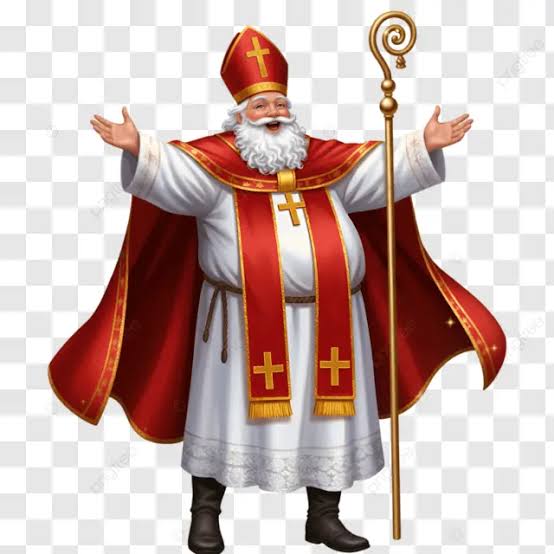
During Nicholas's lifetime, Christianity experienced one of its harshest persecutions under Emperor Diocletian.
Churches were destroyed, scriptures burned, and clergy imprisoned.
Tradition holds that Nicholas was arrested and jailed for his faith. While documentation is limited, many bishops of the era suffered imprisonment.
If true, this experience would have strengthened his reputation as a confessor- someone who endured suffering for Christianity without being executed.
The persecution ended with the rise of Emperor Constantine, who legalized Christianity through the Edict of Milan in 313 CE.
This dramatic shift transformed the church's status within the empire and allowed figures like Nicholas to resume public ministry.
The Council of Nicaea
One of the most famous traditions associated with Saint Nicholas places him at the First Council of Nicaea in 325 CE.
The council, convened by Emperor Constantine, aimed to resolve theological disputes threatening unity within Christianity.
According to legend, Nicholas became so angered by the teachings of Arius - who denied the full divinity of Christ - that he struck him during the proceedings.
While historians doubt the literal truth of this story, it illustrates Nicholas's reputation as a passionate defender of orthodox belief.
Whether or not he attended the council, later generations strongly associated him with doctrinal fidelity and courage.
Death and Early Veneration
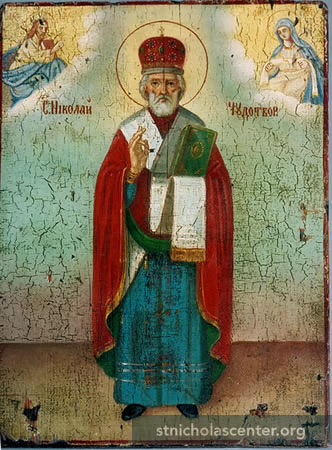
Saint Nicholas is believed to have died on December 6, around the year 343 CE. He was buried in Myra, where his tomb quickly became a site of pilgrimage.
Reports emerged of a miraculous substance, something called "manna," said to flow from his tomb and possess healing properties.
Such accounts increased devotion and spread his fame beyond Lycia.
By the sixth century, churches dedicated to Saint Nicholas existed across the astern Roman Empire.
His feast day on December 6 became widely celebrated, especially among sailors, merchants, and children.
Saint Nicholas
and Medieval Culture
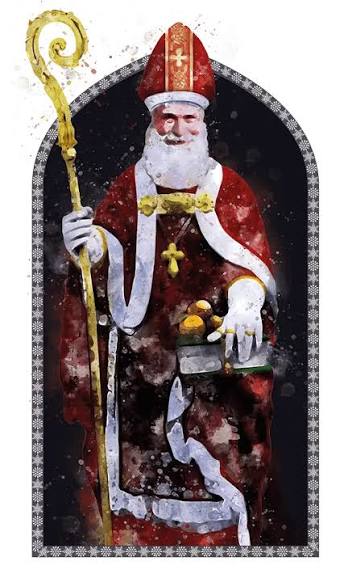
During the Middle Ages, Saint Nicholas became deeply embedded in popular religious life.
Plays, festivals, and school celebrations were often held in his honor.
Children played a central role in these traditions.
In many regions, a"Boy Bishop" ceremony was held around his feast day, symbolizing innocence and humanity.
Nicholas became viewed as a protector of children, reinforcing his association with kindness and moral instruction.
Gift - giving customs linked to December 6 developed across Europe, especially in the Netherlands, Germany, and
France.
From Saint Nicholas to
Santa Claus
The transformation of Saint Nicholas into Santa Claus occurred gradually.
Dutch settlers brought the tradition of "Sinterklaas" to North America in the 17 century.
Over time, his image blended with English Father Christmas and local folklore.
In the 19th century, poems, illustrations, and advertisements reshaped him into a
jolly, red - clad figure associated with Christmas Eve.
Despite these changes, many elements-gift-giving, generosity, secrecy,
and concern for children-trace directly back to the original
bishop of Myra.